Key Takeaways
- Search engines shape how users discover information and brands online
- Google dominates, but alternatives are growing rapidly
- Privacy and AI-driven platforms are reshaping search behavior
- Businesses should diversify visibility across multiple platforms
Introduction
Every single day, we all turn to search without even thinking about it. You want to buy something, fix a problem, learn a skill, or settle an argument, and your first instinct is to type a few words into a search bar. That habit isn’t small at scale. More than 8.5 billion searches happen every day, and in most cases, users don’t care how results appear; they just expect fast, accurate answers.
What many people don’t see is what’s happening behind the scenes. In just a fraction of a second, search engines scan massive databases, analyze relevance, and decide what you should see first. It’s like asking a question to a librarian who instantly knows where every book in the world is stored.
Google may be the default choice for most people, but it’s no longer the only player. Privacy-focused platforms, AI-powered discovery tools, and region-specific tools have expanded the ecosystem into what we now recognize as the Best Search Engines, shaping how people discover information today. In this guide, we’ll walk through what search engines really are, how they work, which ones dominate globally, which alternatives are growing fast, and why all of this matters for everyday users, businesses, and SEO in 2026.
What Are Search Engines and Why Do They Matter?
Search engines function as digital systems that assist users in discovering web-based content. People use search engines to find information, which includes their queries about nearby restaurants and product reviews, tutorials, and answers to their random questions.
The search engine process begins when you enter a question into the search box. The best search engines perform millions of calculations at high speed to determine your initial search results, which operate behind the apparent simplicity of your search. The process that remains hidden from view controls the methods through which people learn information, and businesses expand, and content on the internet receives visibility. Every search engine system functions through three fundamental processes, which operate in tandem with each other.
Crawling
Search engines use automated programs called bots or crawlers to explore the web. These bots move from one page to another by following links, discovering new websites, and identifying updated content. Without crawling, the best search engines would not know what content exists online.
Indexing
Once content is discovered, it is stored and organized in massive databases known as indexes. Think of this as a digital library. Every page is categorized by topic, keywords, media type, and structure. If a page is not indexed, it cannot appear in search results.
Ranking
Ranking is where the real competition happens. When someone searches for something, algorithms analyze indexed pages and rank them based on relevance, authority, freshness, and user experience. The pages that best answer the query appear at the top.
They are important because search engines control visibility. If your website, product, or content doesn’t appear in search results, it’s almost invisible. For users, search engines save time and effort. For businesses, they are one of the most powerful drivers of traffic, trust, and growth.
Why Multiple Search Engines Exist
Google may dominate the market, but it’s not the only option, and it’s not always the best choice for everyone. Different search engines exist because users have different needs and expectations. Some people value privacy more than personalization. Others want instant AI-generated answers instead of long lists of links. In many regions, local language support and regulations also play a major role.
People turn to alternative names of search engines because they want:
- More privacy and less personal data tracking
- Reduced ad influence
- Faster, direct answers
- AI-powered summaries
- Region-specific or language-focused results
From a business perspective, relying on just one platform is risky. Algorithm changes can reduce traffic overnight. Understanding how different search engines work helps businesses diversify their visibility and reduce dependency on a single source.
Top 26 Best Search Engines in the World
Let’s look at the most widely used and best search engines globally and why they matter.
1. Google
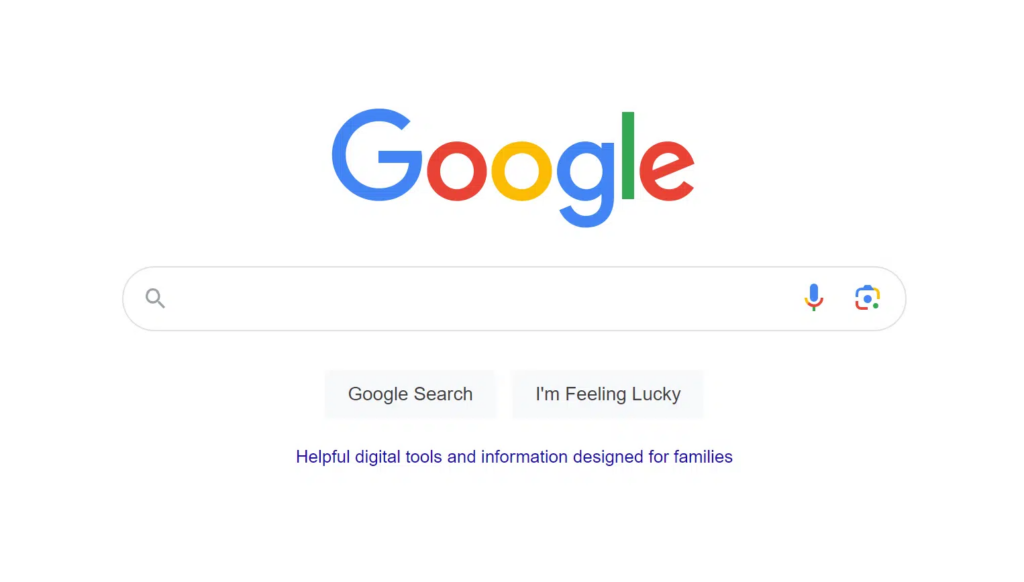
Google is the world’s most dominant search engine, handling over 90% of global search traffic. It uses advanced algorithms, AI, and user behavior signals to deliver highly relevant results. Google excels at understanding intent, context, location, and freshness.
Use case: Everyday searches, local businesses, research, shopping, and content discovery.
2. Bing
Bing is Microsoft’s search engine and is deeply integrated with Windows, Edge, and Microsoft Office. It performs strongly in image and video search and is widely used in corporate environments.
Use case: Desktop search, image/video discovery, enterprise users.

3. Yahoo
Yahoo combines search with news, finance, email, and entertainment. While its search results are powered by Bing, its portal-style experience still attracts loyal users.
Use case: News, finance, casual browsing

4. DuckDuckGo
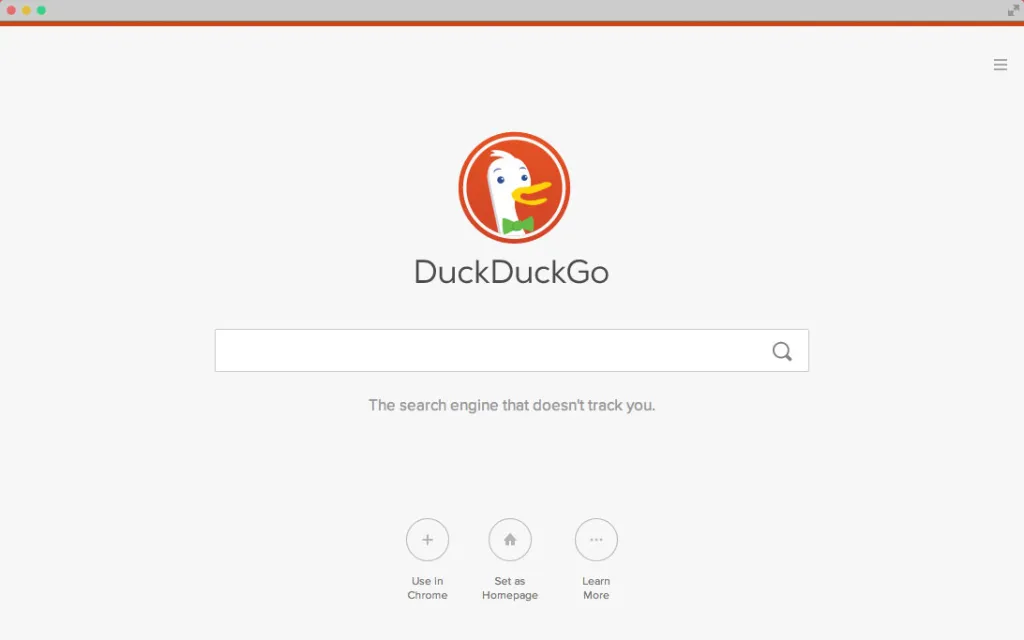
DuckDuckGo focuses entirely on privacy. It does not track searches, store personal data, or create user profiles, making it a popular alternative to Google.
Use case: Private and unbiased searching
5. Startpage
Startpage delivers Google-quality results while acting as a privacy shield. It removes trackers and anonymizes user searches.
Use case: Accurate results without tracking
6. Baidu
Baidu is China’s leading search engine, optimized for Chinese-language content and local services. It operates within China’s regulatory framework.
Use case: Chinese market discovery

7. Yandex
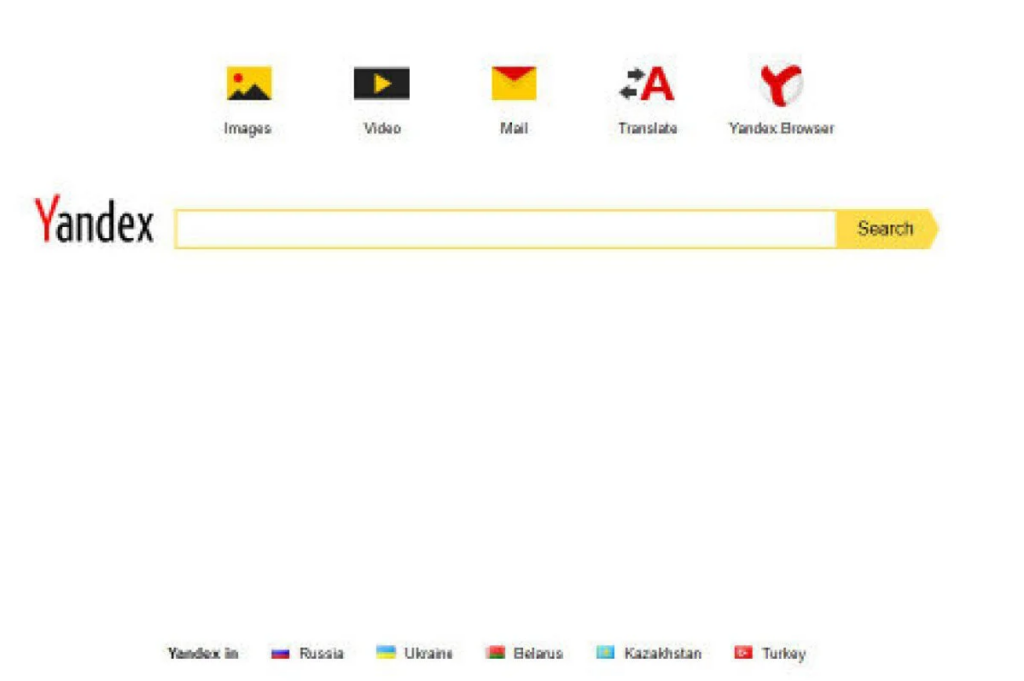
Yandex specializes in Russian-language processing and regional search accuracy, including maps and local services.
Use case: Regional search in Russia
8. Naver
Naver dominates South Korea and emphasizes local content, blogs, and communities rather than traditional websites.
Use case: Korean-language search
9. Ecosia
Ecosia is unique in the list of best search engines that turns everyday searches into a positive environmental impact. It earns revenue through ads, just like traditional search engines, but instead of maximizing profit, Ecosia uses most of its earnings to plant trees around the world. Users can see how many trees their searches help plant, which creates a strong sense of contribution without changing daily behavior. Ecosia also respects user privacy and does not sell personal data.
Use case: Eco-friendly searching that supports environmental causes
10. Qwant
Qwant serves as a European search engine that maintains stringent privacy standards and protects user data throughout its operations. The service does not track user activity, nor does it maintain records of their search history, nor does it create customized search results based on user behavior. The system provides users with unbiased search results that meet all requirements of GDPR regulations. Users who seek modern search capabilities and solid privacy protections choose Qwant because it does not require them to rely on American technology companies.
Use case: Privacy-focused searches within the European digital ecosystem
11. Swisscows
The search engine Swisscows was developed as a privacy-centered platform that serves educational institutions and family users. The search engine Swisscows does not track its users and maintains no personal information, and does not gather their search data. The content filtering system of Swisscows creates a distinct feature that automatically eliminates all explicit content and dangerous materials from its database. The system guarantees that all search results will display content that is suitable for every age group, especially for young users. Swisscows provides precise and pertinent information through its ability to comprehend meaning instead of relying on user data.
Use case: Safe, private, and family-friendly web searching
12. Mojeek
Mojeek is one of the best search engines that operates completely independently. Instead of relying on Google or Bing for results, it uses its own crawler and index, giving users a truly alternative perspective of the web. Mojeek also respects user privacy by avoiding tracking, cookies, and personalized ads. Because of its independent indexing, search results may differ from mainstream platforms, which makes it valuable for research and discovery beyond the usual sources.
Use case: Independent, unbiased web search
13. Ask
Ask.com, which used to be known as Ask Jeeves, operates its search service through one fundamental principle that enables users to find answers to their questions without difficulty. Ask delivers precise answers to user questions while providing detailed explanations and answers to frequently asked questions instead of presenting extensive lists of website links. The product succeeds at providing quick access to information that people need for their regular information needs. The system provides effective results for basic information requests, but it does not function well as a research tool.
Use case: Direct question-and-answer searches
14. Wolfram Alpha
Wolfram Alpha is not a traditional search engine; it is a computational knowledge engine. Instead of searching the web, it processes structured data and performs calculations to generate precise answers. Whether you’re solving equations, analyzing statistics, converting units, or exploring scientific concepts, Wolfram Alpha delivers computed results rather than web links. This makes it extremely powerful for academic, technical, and analytical tasks.
Use case: Mathematics, science, engineering, and data-based queries
15. Internet Archive
The Internet Archive is a unique digital library that allows users to search through historical versions of websites, books, videos, audio files, and other digital content. Its most popular feature, the Wayback Machine, lets users view how websites looked years ago. This makes it invaluable for preserving digital history, verifying past information, and accessing content that may no longer exist online. Unlike traditional search engines, its goal is preservation rather than ranking or advertising.
Use case:
Historical research, content verification, and digital preservation
Who should use it:
Researchers, journalists, historians, students, and fact-checkers
16. Boardreader
Boardreader is a specialized search engine that focuses on indexing forums, message boards, and online communities. Instead of polished marketing content, it surfaces real conversations, opinions, and discussions from users across the web. This makes it especially useful for understanding public sentiment, common problems, and honest feedback that people share in community spaces.
Use case:
Finding real user opinions and discussions
Who should use it:
Consumers, market researchers, analysts, and journalists
17. Gigablast
Gigablast is an independent search engine built on open-source technology. It operates its own crawler and index, offering an alternative to mainstream search platforms. Gigablast also provides APIs and tools for developers who want to experiment with search technology. While its index is smaller than Google’s, it offers transparency and independence that appeal to technical users.
Use case:
Independent and experimental web search
Who should use it:
Developers, technologists, and search engine researchers
18. MetaGer
MetaGer is a European search engine that aggregates results from multiple sources while prioritizing user privacy. It does not track searches, store personal data, or build user profiles. MetaGer also complies with European data protection laws and is operated by a non-profit organization, making it a trusted option for privacy-first users who still want broad coverage.
Use case:
Secure and privacy-focused web search
Who should use it:
Privacy-conscious users, especially in Europe
19. Dogpile
Dogpile is a meta search engine that pulls results from several major search engines and combines them into a single list. This allows users to compare results from different sources without switching platforms. It’s particularly useful for research tasks where seeing multiple perspectives helps validate information.
Use case:
Broad and comparative searching
Who should use it:
Researchers, students, and users who want cross-platform search results
20. WebCrawler
WebCrawler is one of the earliest meta search engines and continues to provide aggregated results from multiple search platforms. It offers a simple interface and broad coverage, making it useful for general browsing when users want a wider range of sources rather than relying on a single search engine.
Use case:
Multi-source web search
Who should use it:
General users who want diverse search results without deep customization
21. Shodan
Shodan is a highly specialized search engine that works very differently from traditional web search platforms. Instead of indexing websites, Shodan scans and indexes internet-connected devices such as servers, webcams, routers, databases, smart devices, and industrial systems. It reveals how devices are configured, whether ports are open, and if systems are exposed to the public internet. Because of this, Shodan is widely used to identify security vulnerabilities before attackers can exploit them.
Use case:
Cybersecurity analysis, vulnerability detection, and network monitoring
Who should use it:
Cybersecurity professionals, ethical hackers, IT administrators, and security researchers
22. Ahmia
Ahmia functions as a search engine that indexes websites that exist on the Tor network of the dark web. The search engine Ahmia helps users discover websites that traditional search engines fail to show. The system excludes verified illegal content while it maintains complete transparency and research accessibility. Researchers use Ahmia to examine dark web patterns, which include privacy-centered services and hidden networks without needing to browse Tor directories.
Use case:
Dark web discovery and analysis
Who should use it:
Security researchers, investigative journalists, and privacy researchers
23. YouTube
YouTube is the second-largest search engine in the world, focused entirely on video content. People use YouTube not just for entertainment but also to learn new skills, fix problems, follow tutorials, and research products. Because videos often explain concepts more clearly than text, YouTube plays a major role in how people consume information today. Its recommendation system also helps users discover related content easily.
Use case:
Video tutorials, learning, entertainment, and reviews
24. OpenAlex
OpenAlex is an academic search platform that indexes research papers, authors, institutions, citations, and datasets. It was built as an open alternative to traditional academic databases. While it doesn’t replace general search engines, it’s essential for research-focused users and often appears in expert-curated lists of the best search engines for education and data discovery.
Best for:
Scholarly research and academic discovery
25. Indeed Search
Indeed Search is one of the largest job-focused search engines globally. It aggregates job listings from company websites, recruitment agencies, and job boards into one searchable platform. Filters like location, salary, and experience level make it practical for real-world job hunting, earning it a permanent place in any comprehensive search engines list.
Best for:
Job discovery and career research
Top AI Search Engines for 2026
AI-powered platforms are no longer just add-ons to traditional search. In 2026, many of the best search engines will be powered by AI that understands context, summarizes information, and responds conversationally. Instead of opening multiple tabs and scanning links, users now get direct, meaningful answers in seconds. Below are the top AI search engines shaping the future of search and redefining what the best search engines look like today.
1. Perplexity AI
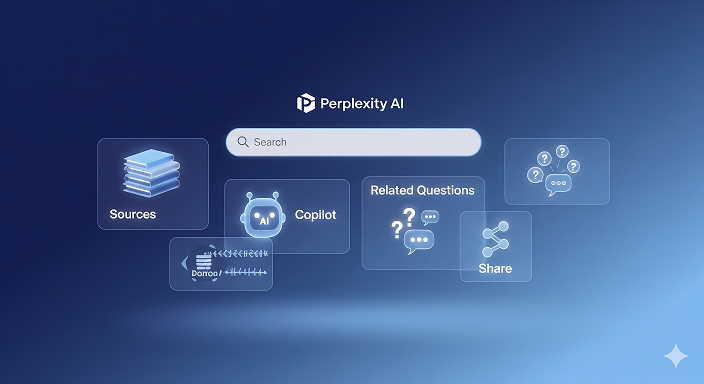
Perplexity AI is quickly becoming one of the best search engines for people who want fast, accurate, and source-backed answers. It blends traditional web search with conversational AI, summarizing results and clearly showing citations so users can verify information. This makes it ideal for research, news tracking, and fact-based learning without endless browsing.
Best for:
Quick answers, research summaries, and fact-based queries
2. You.com
You.com stands out among modern search engines because of its customization. Users can control how results appear, prioritize trusted sources, reduce ads, and switch between AI chat and web results. This flexibility makes it one of the most user-controlled entries in any search engine’s list.
Best for:
Personalized search and AI-assisted browsing
3. Brave Search
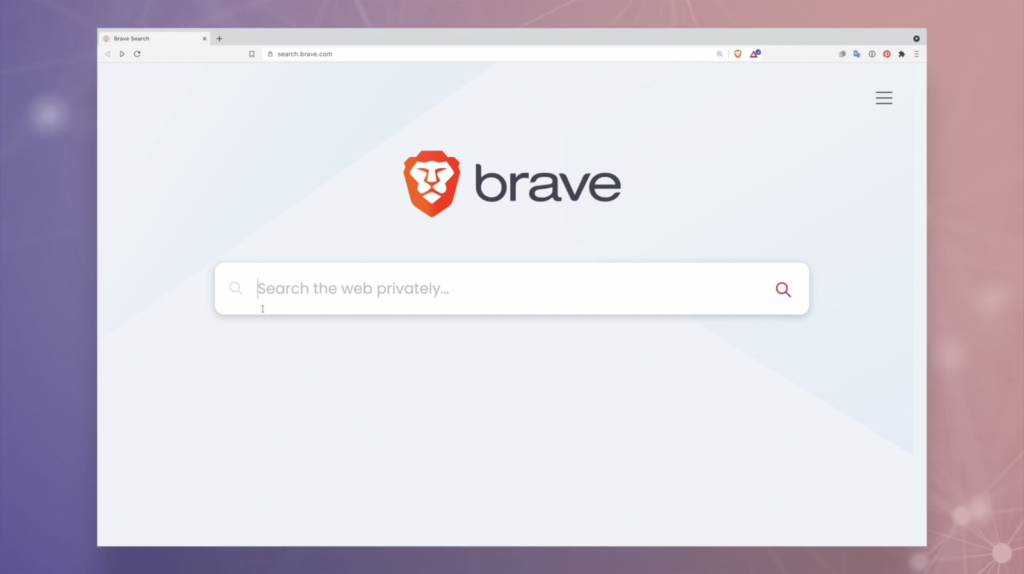
Brave Search combines AI-generated summaries with a strict privacy-first approach. It runs on its own independent index and does not track user behavior, making it one of the best search engines for users who want AI-powered answers without sacrificing privacy or transparency.
Best for:
Private AI search with independent indexing
4. Copilot
Microsoft’s Bing AI integrates GPT-powered responses directly into search. It allows users to ask follow-up questions, compare options, and explore topics conversationally. As part of Microsoft’s ecosystem, it’s becoming one of the most widely used AI-driven search engines globally.
Best for:
AI-assisted discovery, comparisons, and detailed explanations
5. Google Search (AI Overviews)
Google’s AI Overviews signal how even the largest names of search engines are evolving. By summarizing answers directly at the top of results, Google is shifting from link-first search to answer-first discovery. While still evolving, this feature keeps Google firmly positioned among the best search engines in 2026.
Best for:
Everyday searches enhanced with AI summaries

6. Phind
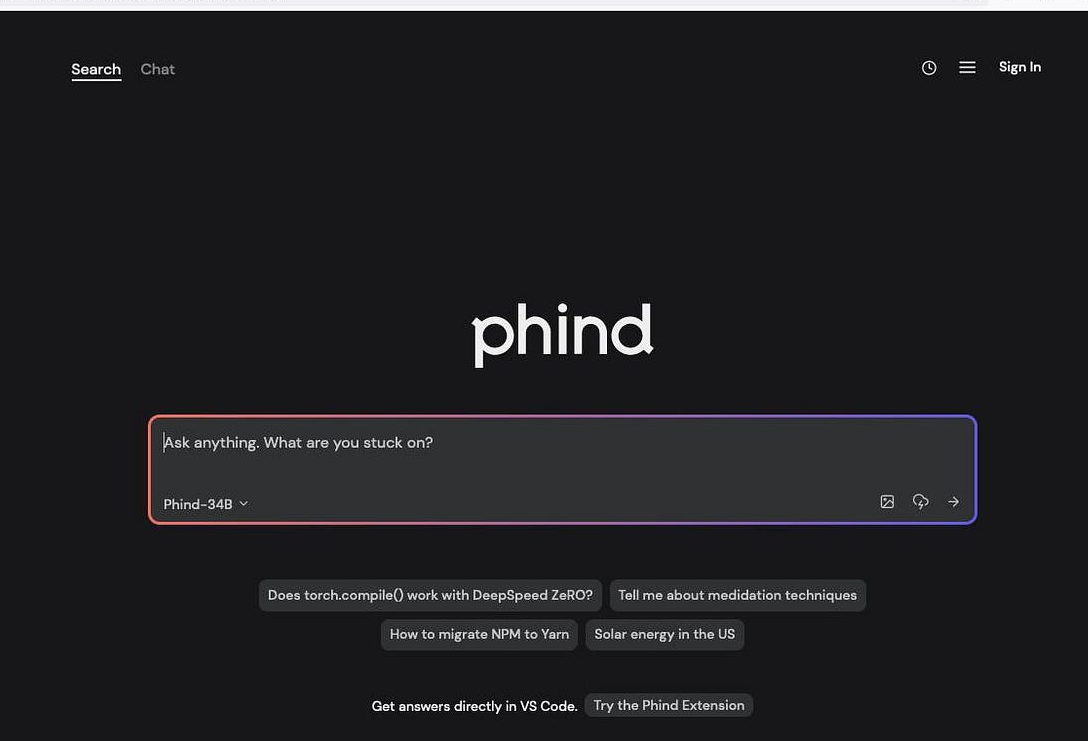
Phind is an AI search engine built specifically for developers and technical professionals. It delivers precise, code-focused answers with explanations and references. In developer-focused search engine lists, Phind is often considered one of the best search engines for programming and engineering queries.
Best for:
Developers, coding help, and technical research
7. Andi Search
Andi Search offers a clean, ad-free, conversational experience. It focuses on trustworthy sources and visual clarity, helping users explore topics without distraction. Among newer AI-powered search engines, Andi appeals to users who want simplicity and transparency.
Best for:
Distraction-free AI search and exploration
8. DeepSeek
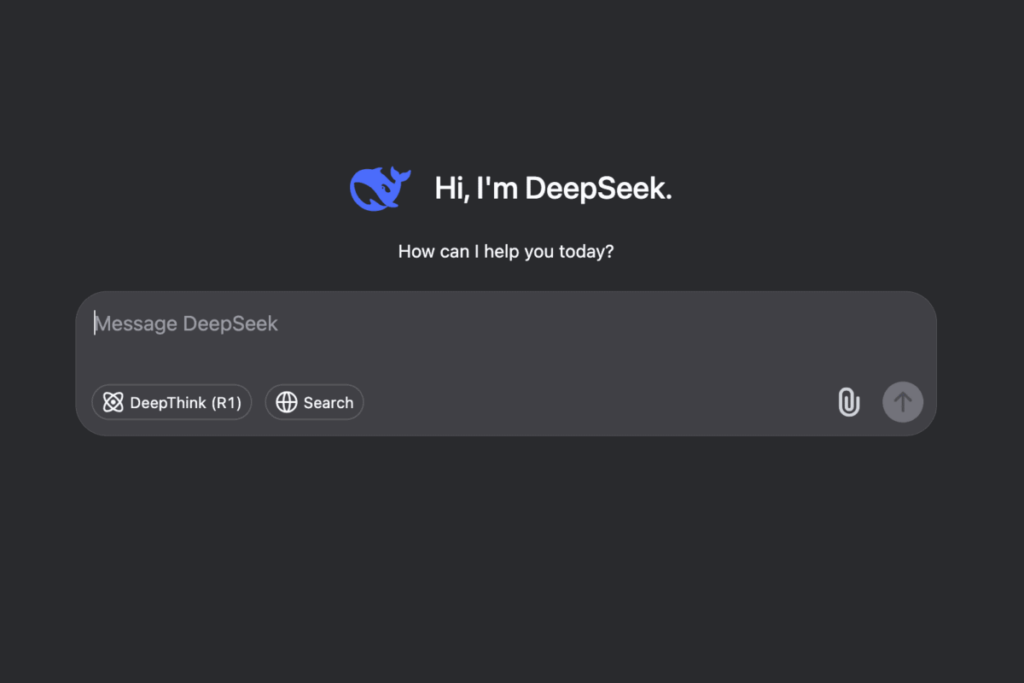
DeepSeek is an emerging AI-powered search and reasoning platform that goes beyond keyword matching. Instead of listing links, it focuses on deep understanding, logical reasoning, and structured explanations. Its reasoning-first approach makes it one of the most promising additions to the next generation of best search engines.
DeepSeek doesn’t just tell you what the answer is; it explains why. This makes it especially valuable for complex research, technical problem-solving, and analytical thinking.
Best for:
Developers, researchers, students, analysts, and users asking complex or technical questions
9. ChatGPT
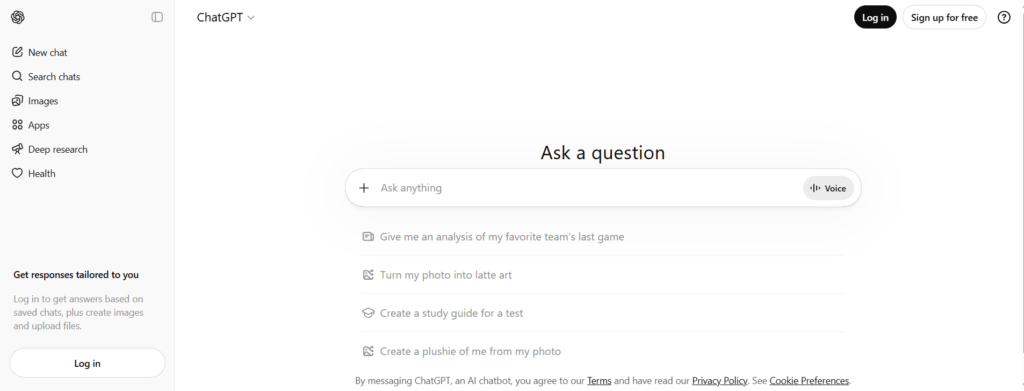
ChatGPT has become one of the most widely used AI tools and is increasingly viewed as an alternative form of search. Many users now rely on it as an AI-powered companion to traditional search engines. Instead of scanning links, users get conversational, context-aware answers and can ask follow-up questions in real time.
ChatGPT excels at simplifying complex topics, making it a favorite among people who prefer explanations over search result pages. As AI-driven discovery grows, ChatGPT continues to influence how people define the best search engines.
Best for:
General users, professionals, marketers, students, creators, and anyone who prefers answers over links
Conclusion
Search is no longer a one-size-fits-all experience. While Google still dominates, the rise of privacy-first platforms, AI-driven tools, and specialized discovery engines has reshaped how people find information online. The best search engines today are not just about links; they’re about speed, trust, context, and intent.
For users, exploring different search engines means better privacy, clearer answers, and more relevant results. For businesses, it means opportunity. Visibility across multiple platforms reduces risk, expands reach, and connects brands with audiences where they actually search.
This is where strategy matters. Agencies like Wildnet Marketing Agency help brands stay discoverable across traditional, privacy-focused, and AI-powered search ecosystems. By aligning SEO, content, and AI search optimization, Wildnet ensures businesses don’t rely on just one platform but win across the entire search landscape in 2026 and beyond.
FAQ
Q 1. What are the best search engines in 2026?
The best search engines include Google, Bing, DuckDuckGo, Brave Search, and AI-driven tools like Perplexity AI and ChatGPT, depending on your needs.
Q 2. Why should I use search engines other than Google?
Alternative search engines offer better privacy, less tracking, AI-powered answers, and region-specific or niche-focused results.
Q 3. Are AI search engines replacing traditional search engines?
No. AI search engines complement traditional ones by providing summaries and conversational answers, not fully replacing link-based search.
Q 4. Which search engines are best for privacy?
DuckDuckGo, Brave Search, Startpage, Qwant, and Swisscows are among the best privacy-focused search engines.
Q 5. What search engines are best for research and learning?
Google Scholar alternatives like OpenAlex, Wolfram Alpha, Perplexity AI, and ChatGPT work well for research and explanations.
Q 6. Do businesses need to optimize for multiple search engines?
Yes. Optimizing across multiple search engines reduces traffic risk and helps brands reach wider, more diverse audiences.
Q 7. How can businesses improve visibility across the best search engines?
By creating high-quality content, focusing on user intent, optimizing for AI summaries, and working with experts like Wildnet Marketing Agency.